
By OKE, Oluyemi Joseph
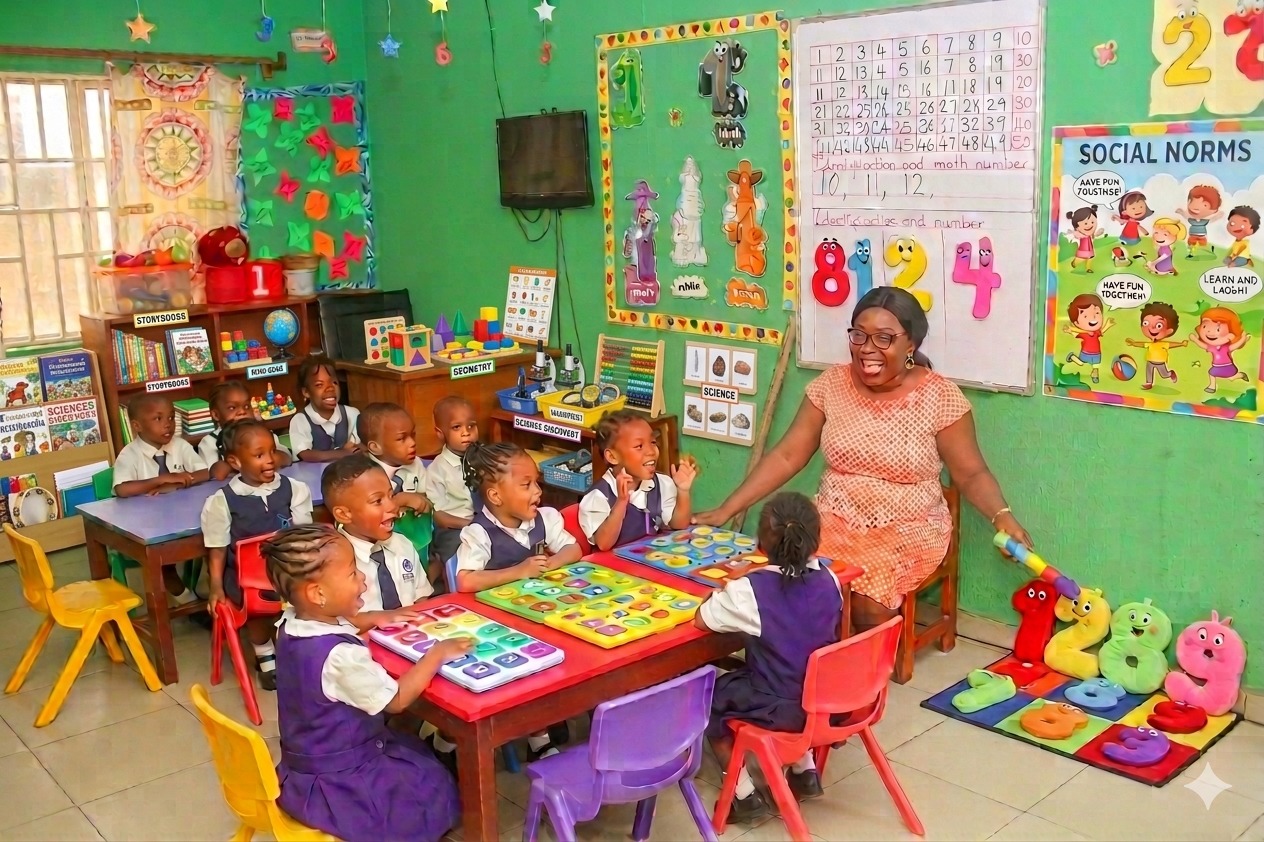
The traditional image of primary education—children sitting in rows, memorizing facts from a chalkboard—is rapidly becoming obsolete. Research in child development and neuroscience confirms what great teachers have always known: young children learn best when they are engaged, active, and having fun. Fun and effective learning are not opposites; they are deeply intertwined. When learning is joyful, it captures attention, strengthens memory, and fosters a lifelong love of discovery. Here are the most powerful methods that make primary education both enjoyable and deeply effective.
1. Learning Through Play: The Cornerstone of Early Learning
Play is often seen as the opposite of “serious” learning, but for primary-aged children, it is the most sophisticated learning tool available. Play-based learning is not unstructured chaos; it is purposeful and guided.
- Structured Play: Teachers design activities with specific learning objectives embedded in games. For example, a simple board game can teach counting, turn-taking, and strategic thinking. A “grocery store” dramatic play corner teaches literacy (writing shopping lists), numeracy (making change), and social skills (negotiation and cooperation).
- Constructive Play: Using building blocks, LEGO, or recycled materials, children learn foundational concepts in physics (balance, gravity), engineering, and collaborative problem-solving.
- Outdoor and Physical Play: Games like hopscotch for numeracy, treasure hunts for following instructions, or relay races with vocabulary words integrate physical movement with cognitive tasks. Movement increases blood flow to the brain and is particularly effective for kinesthetic learners.
2. Gamification: Turning Lessons into Adventures
Gamification involves applying game-design elements to learning activities. It taps into children’s natural desire for competition, achievement, and reward.
- Points, Badges, and Levels: Teachers can create classroom “quests” where students earn points for completing tasks, unlock badges for mastering skills, and advance to new “levels” as they progress. This transforms a standard curriculum into an exciting journey.
- Educational Games: From classic games like Bingo for vocabulary or math facts to digital platforms that adapt to a child’s learning pace, games provide immediate feedback and a safe space to fail, try again, and ultimately succeed.
- Classroom Challenges: Friendly competitions, such as “Math Olympics,” spelling bees with creative twists, or reading marathons, build classroom community and motivate students to engage with content enthusiastically.
3. Hands-On and Experiential Learning: Engaging the Senses
Young children are concrete learners; they understand the world by touching, building, and experiencing it directly. Abstract concepts become accessible when they are made tangible.
- Manipulatives in Math: Using physical objects like counting beads, fraction tiles, or base-ten blocks allows children to see and feel mathematical concepts before moving to abstract symbols. A child who builds a fraction with paper strips understands “one-half” far more deeply than one who simply memorizes the symbol.
- Science Experiments: Simple, safe experiments—planting seeds to learn about growth, mixing vinegar and baking soda to understand chemical reactions, or building simple circuits—ignite curiosity and teach the scientific method through direct experience.
- Project-Based Learning: Instead of isolated lessons, students engage in extended projects. For instance, a project on “Birds in Our Community” might involve reading about birds, writing observational journals, building bird feeders (integrating design and measurement), and creating a final presentation for parents. This method integrates multiple subjects and fosters deep, lasting learning.
4. Arts Integration: Creativity as a Pathway to Understanding
The arts—music, visual arts, drama, and dance—are not mere extracurricular activities; they are powerful vehicles for learning across all subjects.
- Drama and Role-Play: Acting out historical events, embodying a character from a story, or role-playing a scientific concept (like becoming a water droplet in the water cycle) deepens comprehension and empathy. It allows children to “live” the curriculum.
- Music and Rhythm: Songs and rhythmic chants are exceptionally effective for memorizing multiplication tables, grammar rules, or sequences in history. Music engages multiple areas of the brain, making recall easier and more durable.
- Visual Arts: Drawing, painting, and creating models allow students to process and represent their understanding. A child who illustrates a story demonstrates comprehension; one who creates a diagram of the solar system engages with spatial and factual knowledge simultaneously.
5. Collaborative and Peer Learning: Learning Together
Learning is inherently a social activity. Collaborative methods leverage the power of peer interaction to build understanding and essential interpersonal skills.
- Think-Pair-Share: Students first think about a question individually, then discuss their thoughts with a partner, and finally share with the larger group. This structure ensures every child engages, builds confidence, and learns from peers.
- Group Projects and Stations: Rotating through learning stations in small groups allows for differentiated instruction and active, varied activities. Working together on a project teaches communication, delegation, and conflict resolution—skills as important as any academic content.
- Peer Tutoring: Allowing students to teach one another reinforces the tutor’s understanding and provides the learner with a supportive, less intimidating environment. It builds a classroom culture of mutual support.
6. Leveraging Technology: Digital Tools for Engagement
When used thoughtfully, technology can be a powerful ally in creating fun and effective learning experiences.
- Interactive Whiteboards and Apps: Interactive tools can turn a lesson into a collaborative, game-like experience. Well-designed educational apps provide personalized practice, instant feedback, and adaptive challenges.
- Digital Storytelling: Students can create their own digital stories, animations, or short videos, combining literacy, creativity, and technical skills.
- Virtual Field Trips: Technology can transport students to museums, historical sites, or even outer space, providing rich experiences that may be impossible to access otherwise.
7. Cultivating Intrinsic Motivation: The Power of Choice and Autonomy
The most effective learning is driven by a child’s internal desire to know, not by external pressure. Fun and effective classrooms foster intrinsic motivation by:
- Offering Choices: Providing students with options—which book to read for a project, how to present their findings, which game to play at a learning station—gives them ownership over their learning.
- Connecting to Interests: Teachers who take time to learn about their students’ passions can connect curriculum to those interests. A child who loves football can practice fractions by calculating player statistics.
- Creating a Safe Environment for Risk-Taking: When children are not afraid of making mistakes, they are free to experiment, ask questions, and explore. A classroom culture that celebrates effort and “beautiful mistakes” as learning opportunities is one where children thrive.
Conclusion
Fun and effective learning methods are not about making education “easier”; they are about making it deeper, more meaningful, and more memorable. By embracing play, hands-on experiences, collaboration, the arts, and technology, primary education can honor the natural curiosity of young minds. When children are actively engaged and genuinely enjoying the process, they do not just learn—they develop a lifelong passion for learning that will serve them well beyond the classroom walls. The goal is not simply to fill young minds with facts, but to ignite in them a flame of inquiry and joy that will burn brightly throughout their educational journey and beyond.
OKE, OLUYEMI JOSEPH
HEAD OF SCHOOL
ERINDALE SCHOOLS