
By OKE, Oluyemi Joseph
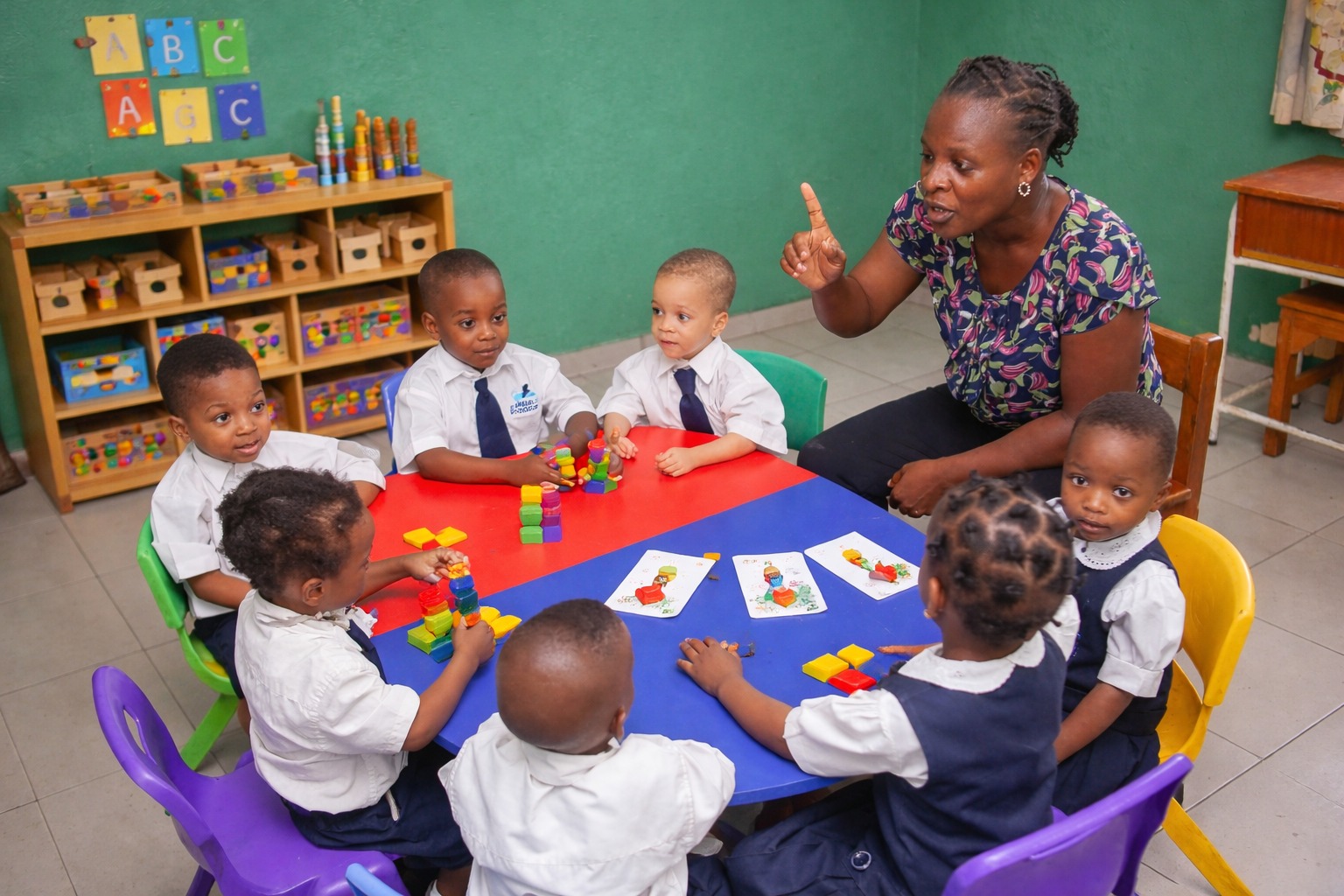
In Nigeria, a nation brimming with potential, the future rests on the shoulders of its youngest citizens. The journey to unlocking that potential begins not in a university lecture hall, but much earlier—in the vibrant, formative years from birth to age eight. Early Childhood Education (ECE) is far more than just a precursor to primary school; it is the very foundation upon which a child’s entire life is built. For every child in Nigeria, access to quality ECE is not a privilege, but a fundamental right and a critical investment in the nation’s future.
1. The Golden Window for Brain Development
The science is clear: the first few years of a child’s life represent a period of unparalleled brain development. During this time, the brain forms over a million neural connections every second. This “golden window” is when the architecture for cognitive, social, and emotional skills is established.
Quality ECE programs provide the essential stimulation—through play, language, and structured interaction—that strengthens these connections. Without this, children risk entering primary school with a developmental lag that becomes increasingly difficult to overcome. For Nigerian children, who face diverse challenges, this early cognitive priming is essential to level the playing field before formal education even begins.
2. Bridging the Gap: Equity and National Development
Nigeria is a country of stark contrasts, with significant disparities in wealth, location, and opportunity. A child in a rural community in Borno State and a child in an urban center in Lagos start life with vastly different access to resources. ECE serves as the most powerful equalizer.
When universally available and qualitatively sound, ECE bridges the gap between privilege and poverty. It ensures that every child, regardless of their family’s socioeconomic background or geographical location, can develop the foundational literacy, numeracy, and social skills needed to succeed. By investing in ECE, Nigeria invests in breaking the intergenerational cycle of poverty, fostering a more skilled and equitable workforce for the future.
3. Building the Pillars of Literacy and Numeracy
One of the most pressing crises in Nigerian education is the high rate of out-of-school children and the alarming learning poverty—the inability to read and understand a simple text by age ten. ECE is the direct antidote to this crisis.
A quality early childhood program does not just teach the alphabet; it instills pre-literacy skills like phonological awareness, vocabulary development, and a love for stories. It builds pre-numeracy skills through counting, pattern recognition, and problem-solving. Children who experience quality ECE are not only more likely to enroll in primary school but are also far more likely to stay enrolled, transition successfully, and achieve foundational literacy and numeracy, setting them up for lifelong learning.
4. Holistic Development: Beyond the Classroom
The importance of ECE extends far beyond academics. It is a crucial arena for holistic development. In a society as diverse and complex as Nigeria, ECE centers become the first social environment where children learn to:
- Socialize and Collaborate: They learn to share, negotiate, resolve conflicts, and work in teams—skills vital for community and national cohesion.
- Develop Emotional Intelligence: They learn to identify and manage their emotions, build resilience, and develop empathy, which are critical for mental well-being and healthy relationships.
- Establish Identity: Through culturally relevant curricula that incorporate Nigerian languages, stories, and traditions, children build a strong sense of self, cultural pride, and identity.
These “soft skills” are increasingly recognized as the hard skills of the 21st century, essential for adaptability, innovation, and leadership.
5. Economic Sense: A High-Return Investment
For a developing economy like Nigeria’s, ECE is one of the most cost-effective investments a nation can make. Economists like Nobel laureate James Heckman have proven that high-quality early childhood development yields a high rate of return—often as high as 13% per annum. These returns manifest as:
- Reduced costs for remedial education and grade repetition.
- A healthier, more productive adult workforce.
- Lower rates of crime and social instability.
- Higher earning potential for individuals, leading to greater tax revenues and economic growth.
For Nigeria, where a demographic dividend is within reach, failing to invest in the quality of its future workforce is a costly economic mistake.
6. The Nigerian Context: Challenges and the Path Forward
Despite its clear importance, ECE in Nigeria faces significant hurdles. According to UNICEF, over half of Nigerian children aged 3-5 do not attend any form of early childhood education. Challenges include:
- Inadequate Funding: Insufficient government allocation for pre-primary education.
- Poor Quality: Many ECE centers lack trained teachers, age-appropriate learning materials, and safe, stimulating environments.
- Inequitable Access: Rural areas and children from the poorest households are the most underserved.
- Inconsistent Policy Implementation: While Nigeria has a National Policy on ECE, its implementation is often weak and uncoordinated across states.
Conclusion: A Promise to the Next Generation
The importance of early childhood education to every child in Nigeria cannot be overstated. It is the cornerstone of individual potential and the bedrock of national transformation. When we provide a child with quality ECE, we are not just preparing them for primary school; we are equipping them with the cognitive, social, and emotional tools to navigate life, contribute to their community, and become a part of Nigeria’s solution.
For Nigeria to truly harness its potential, it must make a bold, unwavering commitment to its youngest citizens. This means increased and dedicated government funding, rigorous teacher training, a focus on community-based and culturally relevant models, and a national recognition that the first eight years of a child’s life are the most important. Investing in early childhood education is not an expense; it is the most profound investment Nigeria can make in a future of stability, prosperity, and boundless possibilities. Every child deserves that foundation, and a nation’s future depends on it.
OKE, Oluyemi Joseph
Head of School, Erindale Schools